Thursday, February 17, 2011

It's A Living - Part 5


DTS 500 at a Wal-Mart

Fotomat Booth
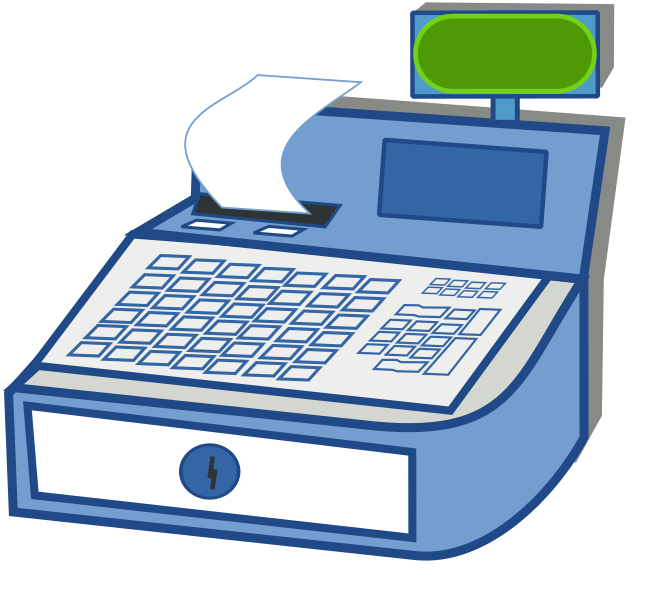
  From 1978 to 1991, I worked at Capitol Cash Register, now called CCR Data Systems, located in Concord, NH.  I worked on only electronic registers which was fine with me!  They weren't quite as heavy, oily, or inky.  Almost all of the ECR's I mentioned in Part 4, I continued to work on plus additional ones.  It remains to be seen if I can find any pictures of them on the 'net.  The primary line was Data Terminal Systems or DTS that had just started in 1975.  They were unique because they were a US based company nearby in Maynard, MA.  One machine that was passe when I got there, was the DTS Dacap.  The DTS 100 was a tiny little thing that was often found in similarly tiny Fotomat booths.  Invariably, I would go on a service call to a Fotomat about the same time they were having a shift change (there was only room for one person in the booth) on a hot summer day when the AC wasn't working.  A common occurrence was having pennies work their way into the electronics through the top of the machine.  The DTS 150 was a little better with a slightly improved printer.  The DTS 200 sported a dot matrix printer instead of typewheel printers that were in it's predecessors but was constantly prone to lock-ups.  The DTS 300 was more rugged with the proven Seiko EP-101 printer.  The machines were more sophisticated with the advent of the DTS 400 and DTS 440.  They still used the 101 printer but had many more functions.  The 400 was designed for restaurant applications and the 440 for grocery stores.  The DTS 440 was my favourite which I knew inside and out, it was rugged, dependable and relatively easy to service.  When the DTS 500 series came out, they had dot matrix printers and much more sophistication in it's programming.  It did a lot more so there was a lot to go wrong.  When this series came out, dealers now had to have a 'programming department'.
Electronic cash register Maconick
TEC BRC-30
  One machine that was fascinating was TEC's very first ECR that I never saw until I was at CCR.  It was called the TEC Maconic BRC-30.  What was interesting about it was the fact that a third of the machine was still mechanical, taking care of all the printing.  The other two-thirds was the electronics.
  We were also Sweda dealers so had lots of Sweda mechanical and ECR's.  As I previously mentioned, the Sweda ECR's were built by Omron and were very reliable.  There was a small population of MKD Bantam and Victor 560 registers, thank goodness!
  In the early days of CCR, before we had a call center to dispatch us to our calls, the service manager would gave us a fist full of slips that had our service calls for the day.  They were organized into areas, naturally, and, in the summer, when he asked who wanted the Hampton Beach, NH run, everyone volunteered, because they knew that there was the opportunity for girl watching on the beach!
  When the CCR building was built, there was a hole left in the floor between the main floor and the basement.  The electronics department, where I worked, was in the basement.  The intent of the opening was for the future installation of an elevator.  The elevator never happened, and it was a standing joke that we never got an elevator, we only got the shaft.


  Eventually, my primary system that I worked on was the Sweda 80S.  It was a supermarket scanning system using a pair of Data General Nova 1200 computers in a 'backroom' environment.  The scanners and POS (point of sale) terminals were built by Sweda. There were thirteen Shaw's Supermarkets in our area and I had the fun of upgrading most of them from mechanical registers to scanning stores.  By today's standards, the computer was archaic, using 64KB of core memory, which is a fraction of what today's home PC's use.  The hard drive is even more ridiculous, the drawer that is partially pulled out in the photo is a 10MB hard drive and two people can barely carry it.  There is a fixed 5MB disk and a removable 5MB disk (the white circle on top of the drawer).  Things have changed.
  At the frontend, there were checkstand controllers that were a smaller version of the Nova 1200 and were crammed underneath the checkstand.  One of these could control four 'dumb' terminals.  One thing noteworthy about the terminals was the printer.  It was like a Seiko 101 printer, but had a much larger print drum, which made it a slower printer.  What made this printer unique was it's ability to print full alpha, hence the larger drum.  During installation, it was necessary to put pins on hundreds of wires, one at a time, so that the cables could be interconnected to the controllers and back to the mainframe.
  In 1984 I was transferred to Vermont where CCR had established a branch service office in Montpelier.  Hammond-Epco had lost the DTS franchise in the state and we took it over.  Vermont is a beautiful state and it was great to travel all over it on service calls and see it up close.
  The downside to taking over the accounts of another dealer is that you have no programming documentation of the machines.  That meant taking program 'dumps' from the registers and translating them into a hard copy.  The one that was the trickiest was the DTS 440 because a program dump was from a Seiko EP-101 printer.  The printout was whatever the character was on the printdrum for that particular column and position.  The program was written in hexadecimal so there were 16 characters in each set.  It was a matter of identifying the character for each column of each line and convert it to the hex equivalent and inserting it into the appropriate places on the program sheet.
  There were a lot of DTS 440's in many P&C and Grand Union markets.  Later, Price Chopper bought up a lot of these stores.  There were also many smaller businesses with every model of DTS.  In addition, we were heavily engaged in TEC's and serviced just about any other brand; Casio, Sharp, Teknika, etc.
  DTS's new line of ECR's was the DTS 2100, not built by them but by Kyrocera, a Japanese firm.  It was a popular machine that worked fairly well.  It had an interesting bit of engineering in it; if the printer circuit overloaded, it would blow out a transistor to protect the fuse, hmmmmm.  Not long after, Data Terminal Systems got bounced around, first it was sold to National Semiconductor, then they were sold to ICL who was in turn sold to Fujitsu, I hope I have that all correct!
  Yes, I am afraid there is more to come..... 

Wednesday, February 16, 2011

Your Closest And Longest Friend Is Yourself

I was reminded of a passage from Hamlet, the other day, when Polonius is giving advice to his son, Laetes:

This above all: to thine own self be true,
And it must follow, as the night the day,
Thou canst not then be false to any man.

  It is easier to be honest with others if you are honest with yourself.  To accomplish this may require some work, aye, there's the rub (sorry, Hamlet, again).  Strange as it may sound, you need to treat yourself as an entity, a separate individual, you need to step away from yourself, if you will.  By doing this, you will have a perspective of yourself that is more in line with the way others see you.  When you do this, you will better see what improvements you may need to make.  You will also need the desire to make these changes.  It all comes down to respecting yourself, liking yourself, even loving yourself.  Now, I am not talking about being conceited, everything needs balance.  I am simply saying that for self dignity you need self respect:  This above all: to thine own self be true.
  When you are true to yourself, it is easier to be genuinely true to others and when you are a friend to yourself,  you will find friendship in others:  Thou canst not then be false to any man.

Respect your efforts, respect yourself. Self-respect leads to self-discipline. When you have both firmly under your belt, that's real power. - Clint Eastwood

Tuesday, February 15, 2011

It's A Living - Part 4

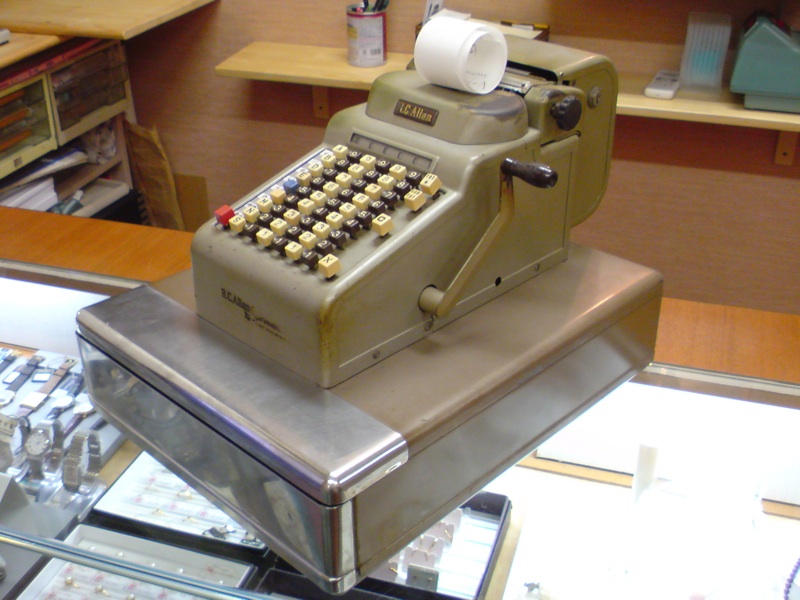
  In the back corner of the showroom at Standard Cash Register, loomed an R.C. Allen Model 700 Electronic Cash Register of '70's vintage.  I wish I had a photo to show you, but after scouring the Internet, I was unable to find any remnants of one.  In fact, I looked for other electronic registers for that era and found nothing. They don't seem to have the endurance of the old mechanical registers!  Anyway, the R.C. Allen 700 was of a rather unique design, where the cabinet was like a tilted banana shaped dish attached to a cash drawer, similar to the early Data Checkers.  What really dates it is the 'nixie' tube display.  'Nixie' tubes (I have no idea where the nick name came from) are little vacuum tubes with digits that glow inside them.  It had a printer with  a receipt and journal tape that were about an inch wide (28mm).  The keyboard was about the size of a large calculator with about a half dozen department keys.  It wasn't a terribly durable machine.  We only had a few in a couple local convenient stores.  Later on, R.C. Allen came out with the Model 100 which was an updated version of the Model 700.  Nixie tubes were replaced with LED's and the electronics became integrated onto a much smaller board.  Another machine we started peddling was the FJay 560 electronic register.  FJay was the Fred Jay Corporation in Chicago.  For many years, they were famous for selling reconditioned mechanical registers and parts to dealers and eventually started selling new machines in the form of JCM mechanical registers (previously mentioned) and FJay electronic registers.  The FJay 560 was actually built by Omron and was a very reliable machine.  Okay, I gotta tell this story;  we had a gas station customer with one of these machines and they were broken into, the FJay 560 was taken away, the drawer was forced open, money taken, and the machine was tossed off a bridge into a river.  Two weeks later, it was fished out of the river and eventually made it back to our shop for estimates.  It still worked!  Except for cosmetic damage, the register still ran.  Impressive.  Omron also built the Sweda electronic registers (which were almost identical to the FJay machines) and eventually started selling them under their own name.  The only shortcoming to the FJay 560 was it's inability to correctly calculate tax.  It was only able to do straight percentages for tax, but most states have what we called a 'tax lookup table' where the 'break points', that is the points where the next penny tax is incremented, is arbitrarily chosen by the lawmakers.  When the FJay 561 came out, it was able to be programmed to follow any tax table.  All of these Omron designed machines had the famous Seiko 101 printer that became the workhorse of the industry.  They used 44mm paper and were very durable, at least for the first ten years, then after that, the 'trip shafts' would wear out and they would drop characters. 
Seiko EP-101 Printer
  Added to our product line was the TEC (Tokyo Electric Co.) electronic register MA-110. It, too, was limited to straight percentage but the problem was corrected with the MA-130 series. They proved to be a reliable register as well as the MA-140, MA-160, and MA-170 series which had a bigger printer, therefore a more substantial sized receipt tape. Unlike most ECR manufacturers who used printers from other sources (usually Seiko), TEC typically built their own printers for most of their models.
  The last 'bercheeb' I would like to talk about is Victor's first attempt at an electronic cash register, the Victor 560, that was a machine I will never forget.
In 1973, Victor had developed a fantastic desktop calculator using a dot-matrix printhead.  They incorporated this printhead into the Model 560.  Although it worked great in a calculator, it did not in a cash register.  Not to mention, the engineers (who must have had some vendetta against technicians) bundled all the circuit boards in such a way to make them virtually impossible to get at.  In theory it was a solid machine with great potential.  In reality it was constant service calls.  The 560 was a general merchandise and grocery machine, they also came out with the 570 for restaurant applications.
  You guessed it, more to come....


Monday, February 14, 2011

It's A Living - Part 3

- - WARNING, HARDCORE CASH REGISTER CONTENT AHEAD! - - 
 I don't expect you to share my passion for cash registers, so I won't be upset if you skip over this entry.
Anker F7

As I previously mentioned, my internship with cash registers started in 1974 at Standard Cash Register, located at 301 Central Avenue, Dover, NH but it is no longer there.  We referred to the cash registers as 'machines', and the owner's daughter picked up on the term.  However, she was very young and couldn't pronounce 'machine' so it came out as 'berscheeb'.  So the very first 'berscheeb' I became proficient at, was the German-made Anker, the model F7 shown at the left.  It was a very well built machine used in many markets in the Boston area, including Purity Supreme and Star Market.  It was always the goal to sell maintenance contracts to the businesses we serviced.  That was a good thing for both them and us, we had guaranteed income and they had fixed costs they could budget for the year.  When I had started working for Standard, the largest account we had was Rigazio's Market owned by John Rigazio, an interesting person, in Rochester, NH with three Anker Registers.  For extra income, I could sell contracts and receive a commission and being a young father and husband, I needed the bucks, so I went for it.  I managed to sell contracts to eleven Star Markets and thirteen Purity Supreme markets.  The downside was they were predominantly in the Boston area and that made for long days on service calls.  We were a small company and there were only two and sometimes three of us to do the work.
Cash register. Photograph Joanna Boileau
NCR Class 51
  Along with Anker registers, we would service other makes.  There were a lot of NCR's out there.  A common supermarket 'berscheeb' was the Class 51.  It's predecessor was the Class 6000.  One thing I could never figure out was why the older models had larger model numbers!  For smaller markets and restaurants, you would often see the Class 21.
NCR Class 1900

NCR Class 6000
                                                                                         
In bars, the machine you would see most, was the Class 1900, though sometimes you would see a 51, 21, or 24.  The last mechanical machines that NCR produced was the Class 24 and the Class 5.  That was easy to tell, because the cases were plastic instead of metal.  The 24 was a smaller machine, basically an updated version of the 21 and the 5 was a monster that was the high end machine for supermarkets and the like.  Fortunately for me that was one machine that we wouldn't service, whew!
NCR 21


NCR Class 24


Victor 45


R.C. Allen 'A-Mod'
We also sold and serviced Victor, JCM and R.C. Allen cash registers as well as servicing Hugin and Sweda. Interestingly, the Victor, Hugin, and Sweda mechanical registers are all cousins to each other where the companies have all tied in together at one time or another. The most common Victor we sold and serviced was the Model 45 for general retail and the Model 40 for restaurants. The JCM's were Japanese machines that was our 'econony' line. R.C. Allen had been around a long time making adding machines. I think one day they decided to put their adding machine on a cash drawer and call it a cash register, because that is what it certainly looked like! The term that applied to this fabrication was called an 'A Mod'. The owner of Standard Cash Register, Dick Lemke, got his start working for an office machine company in Dover, NH, and he asked if they could expand into cash registers and eventually Standard was a spin off from that company, focusing on just cash registers. I believe it was the R.C. Allen line that started that, because Standard was heavy into the R.C. Allen machines.


Sweda 46

  The most common Sweda we serviced was the Model 46 as well as some of it's bigger brother, the Model 76.
  Eventually, the technology took a big change and the electronic register came along.  When I first started at Standard, there was one, lone, ECR (electronic cash register) in the back corner of the show room.  More of this exciting story to follow!....


Sunday, February 13, 2011

It's A Living - Part 2


Image result for stake truck
   In 1972, after serving in the Air Force for four years, I got a summer job driving a fish truck, which comprised of making deliveries to hotels and restaurants in the York County, Maine area, or driving to Boston to pick up fish from the wholesalers.  If I wasn't driving, I was filleting fish in the shop.  Needless to say, I smelled very fishy at the end of the day.  That job lasted well into the fall (I did a good job so Bob Preble kept me on longer).  Very soon after that, I found work as a carpenter's helper with Nick Kingsbury of Cape Porpoise,  Maine.  I had experience working with carpenters as a teenager during summer vacations (see: If I Were A Carpenter...) and learned even more from him.  These skills paid off later.  During 1973, I was an electronic lab technician with Maremont Corporation in Saco, Maine.  That was very interesting work where I built and tested prototype alternators following the designs made by the engineers.  In 1974, a friend of my wife's needed help in a business he owned.  Dick Lemke had a small cash register company and he needed a repair technician.  I knew nothing about cash registers so he trained me and a week later, he went on vacation and I was on my own for awhile, it was sink or swim!  That, my friends, is how I got into the cash register game, and I have enjoyed it ever since!  Fair warning, more to follow!.....Image result for sweda 46

Friday, February 11, 2011

It's A Living - Part 1


Lorenzo

Frank

  My great-grandfather, Lorenzo, had a grocery store in Canton, Maine.  My grandfather, Frank, was in the grocery business most of his life.  After he graduated from high school, he worked in a grocery store in Peru, Maine for three years.  In 1923 when he was 26, he started working in a grocery store in Dixfield, Maine.  A year later he bought the business, that is what I call moving up the ladder! He was a butcher and meat manager for many years in First National Stores and Sampson's Supermarkets around Maine.  He should have retired but because he was raising me, he continued to work as the butcher at Towne & Clark, a country style general store in Kennebunkport, Maine.  Lastly, he was the butcher at the Arundel Market in Arundel, Maine until his passing.  It is said that his motto  was, "I won't sell any meat that I wouldn't put on my own table!" 
  My Uncle Frank was in department store management for many years, starting with J.J. Newberry's as store manager for ten years (where he was the youngest manager the chain ever had) and then he owned and operated Small's Department Store in Derry, NH for three years. Next he was with Mal's Department Stores for nine years starting as a store manager and finishing as the General Manager for the chain. After all that, he couldn't just retire, he bought a little general store in Troy, Maine, which he owned and operated until his passing. After which, his son, Joe, continues the tradition and adding a heating oil business to the mix.
  My Uncle Joe was the Postmaster in Harrison, Maine for many years. So all of these men on my dad's side of the family were very retail oriented, well, a post office is sort of like a store! My profession is also of a retail nature but with a different slant. For over thirty years, I have been servicing and installing cash registers, something you always see in the retail trade.
  More to follow.....


Monday, February 7, 2011

I Wish Perry Mason Was Here.....

  Well, it happened again.  Something has slipped into my head and is bouncing around until it finds a way out.  I was watching a film yesterday, titled True Grit with Jeff Bridges.  By the way, I think I like the John Wayne version better.  I have to admit, the new one has such realistic dialogue to fit the time period, I found myself listening very carefully to understand all they were saying.  Anyway, in one scene, Mattie is talking about Natural Law, a deep subject for a fourteen year old.  I decided to look into it further....
  Natural law or the law of nature (Latin: lex naturalis) has been described as a law whose content is set by nature and therefore is universal.  As classically used, natural law refers to the use of reason to analyze human nature and deduce binding rules of moral behavior.  Although natural law is often conflated with common law, the two are distinct in that natural law is a view that certain rights or values are inherent in or universally cognizable by virtue of human reason or human nature, while common law is the legal tradition whereby certain rights or values are legally cognizable by virtue of judicial recognition or articulation.
  The U.S. Declaration of Independence states that it has become necessary for the United States to assume "the separate and equal station to which the Laws of Nature and of Nature's God entitle them". Some early American lawyers and judges perceived natural law as too tenuous, amorphous and evanescent a legal basis for grounding concrete rights and governmental limitations.  Natural law did, however, serve as authority for legal claims and rights in some judicial decisions, legislative acts, and legal pronouncements.  Robert Lowry Clinton (associate professor and director of graduate studies in the department of political science at Southern Illinois University) argues that the U.S. Constitution rests on a common law foundation and the common law, in turn, rests on a classical natural law foundation.

That old law about 'an eye for an eye' leaves everybody blind. The time is always right to do the right thing. - Martin Luther King, Jr.

Wednesday, February 2, 2011

Blast From The Past - Part 4

You are probably thinking, "oh no, not another Blast From The Past!" Yup, since it is my show, I call the shots. 
Image result for childs record playerWhen I was quite small, I am going to guess about four years old, I had a little child's record player. It was one of those old portable kind that was bright red.  Actually, it looked like the one depicted on the right.  I remember playing whatever records I could find.  Mostly they were yellow and red, plastic, 78 RPM Disney records about Goofy, Dumbo, and Davey Crockett.  But I do remember a couple records that I probably misappropriated from my parents.  The first one was Jambalaya by Jo Stafford, that came out in 1952.  The second one was
Mr. Sandman by the Chordettees that came out in 1954.  That was a great song with great harmony.  Linda Ronstadt did a great version of it as well.  Heck, her songs are always great (I am a bit biased).  I would have linked Linda Ronstadt's version if I could have found one, but alas, I could not.

Tuesday, February 1, 2011

Deep Thoughts......

  If I ever find that I am getting caught up in myself, thinking I am a pretty smart guy, all I have to do is dwell on Quantum Mechanics for a moment then I realise how dumb I really am.  I will leave that kind of thinking to people like Stephen Hawking.  One thing about the subject that I really find absolutely fascinating is Quantum Entanglement.  Quantum Entanglement is when two particles will act together and become a system. They behave like one object, but remain two separate objects. It is as if they sit on the same teeter-totter seesaw. No matter how long the seesaw is, even if it is one million miles long, if one end is down the other end must be up, and this happens instantly.  When I say 'instantly', I don't mean at the speed of light (which is over five seconds for a million mile seesaw!), I mean at the very same moment.  The two objects have sympathetic movement at the very same moment, no matter how far apart they are.  Of course this activity is happening at a subatomic level.  There is so much we still don't know!

I am now convinced that theoretical physics is actually philosophy. - Max Born